
1. What inspired you to start DEXIT, and when did you realize that digital assets had become an important—but often overlooked—part of estate planning?
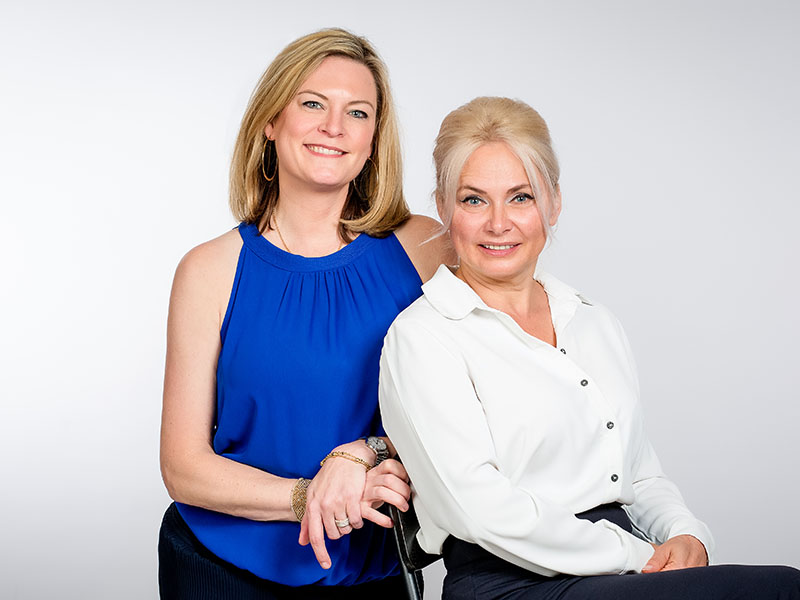
DEXIT started with two moms trading notes on the same problem from opposite directions.
Tatyana ran into it while writing her own will, a document that says who inherits what, but leaves her executor locked out by two-factor authentication, with no way into Venmo, Instagram, or anything else.
Natalia hit the same wall from the other side, during a divorce, hunting down hidden digital assets like domain names that had gone invisible.
They already knew each other through their kids' school. Comparing stories, they saw the real gap: legal paperwork alone doesn't get anyone into an account. Families and attorneys needed a hands-on roadmap, not just a document.
That's what became DEXIT.
2. What digital assets do families most often forget to plan for?
Families usually plan for the big-ticket items, like real estate or a bank account. It's the smaller pieces that get missed. Photos and videos that exist only online, with no hard physical copy anywhere. Social media pages, whether personal or small-business pages, remain active and open as if nothing happened. Money sitting in apps like PayPal or Venmo, or in neobanks, is overlooked because they exist only online. Subscriptions that keep charging a card long after someone has passed away become burdensome. Let's not overlook passwords that could be as easy as one's dog's name or held in a password bank with no designated beneficiary. Digital assets are overlooked because they are hard to find if you are not in the "know", and there is no documentation of these assets. The other challenge is that they may or may not have monetary value; a domain name could be worth 50K and be easily overlooked by an estate planner focused on the primary bank accounts.
3. How can technology make this easier for families?
The irony is that technology makes it that much more difficult for families, resulting in loss and despair due to being locked out. At Dexit, we've created the DEXITPLAN™, which allows a person to map out their digital footprint and assign directives for their accounts. This is extremely important! The DEXITPLAN is comprised of two sections, first a Digital Asset Planner, where someone lists their accounts and assigns a directive such as transferring funds, closing the account, deleting the account, or even memorializing the social media page. Second, an Executor's Guide, a comprehensive tech guide to help executors fulfill those directives. If a family needs extra help closing or moving accounts, Dexit agents can assist under the executor's legal authority.
4. What drew DEXIT to the LIVE Coalition?
DEXIT joined LIVE because their goals aligned perfectly: to get more people talking about digital estate planning and to urge lawmakers to catch up. LIVE is working diligently state by state to update the estate industry and bring it into the new millennium. We are also energized by the other communities that share the same drive and goals. LIVE brings together lawyers, tech companies, and consumer groups who are all pushing for change in the same direction. Digital assets are still a blind spot for most people, let alone their impact on future family members, so the more voices calling for changes, the better!
5. What legal changes are most urgently needed?
Right now, the law is playing catch-up with how we actually live. Most states passed a law called RUFADAA to help families access a loved one's online accounts, but it doesn't cover everything and doesn't always align with tech companies' own rules. That means a family can have the legal right to something and still not gain access due to the company's own policies, since the user signed an agreement with the company when they opened the account. What's missing is a clearer, more consistent rule, one that treats digital assets not just as cryptocurrencies but as accounts that hold value, whether emotional or fiscal, affecting future family members.